
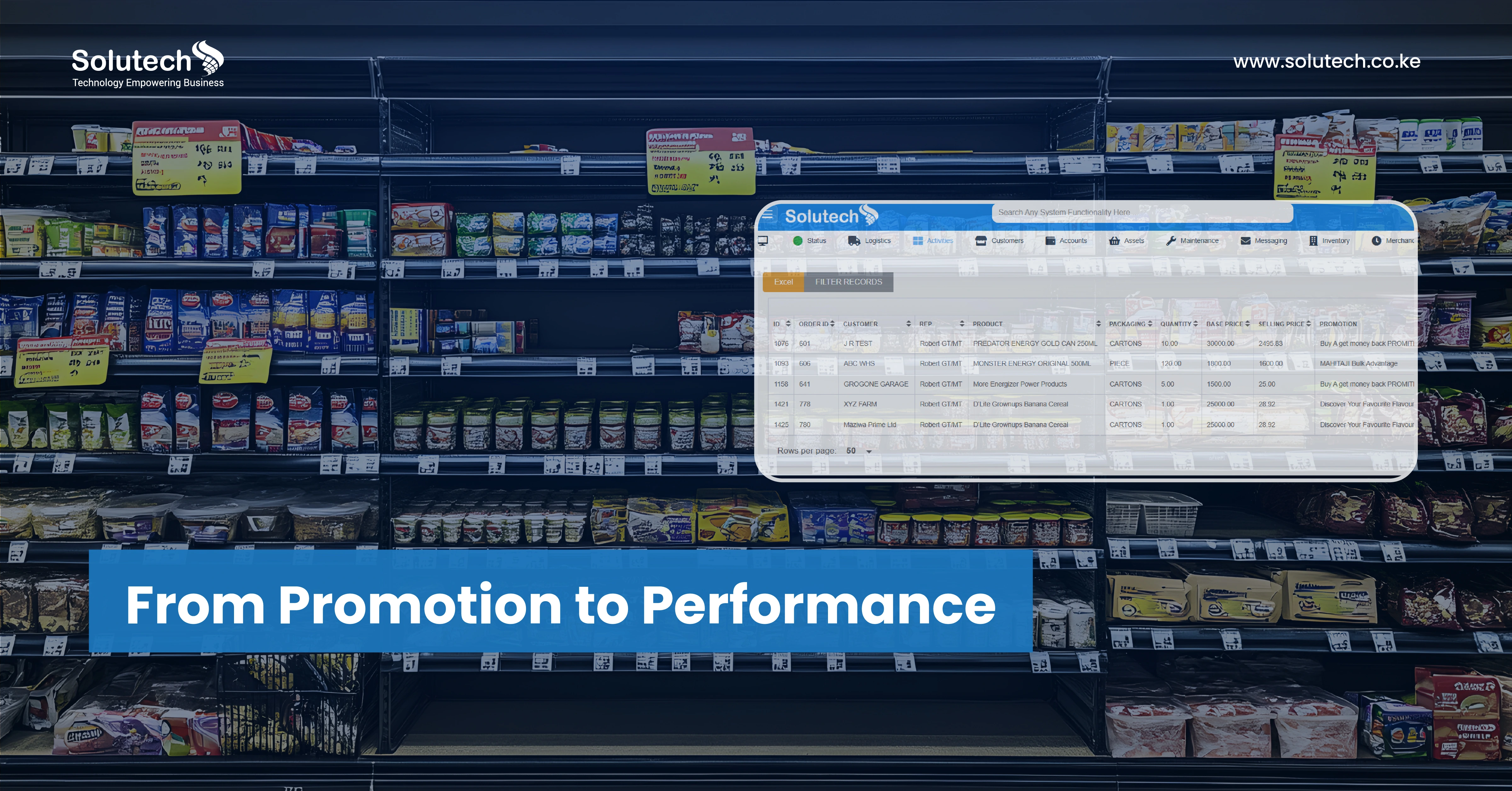
Explore how product availability, shelf presence and display compliance help FMCG brands understand promotional execution across Modern Trade outlets.
A promotional plan is a statement of intent. It sets out which products will be featured, which outlets will carry them, what offer the shopper will see and how the display should look. What it cannot confirm is whether any of that has happened.
Between campaign approval and the shopper’s first glance sit many handoffs: stock allocation, distributor deliveries, agreements with outlet managers, field team visits and store staff with their own priorities. Across Modern Trade, where one campaign may run in dozens of outlets belonging to several chains, each handoff can bend the plan a little. A launch date tells a brand when a promotion began on paper. It does not show whether promoted products were on the shelf, whether the display was built as agreed, or whether one outlet resembles another.
Retail visibility closes that knowledge gap. It does not explain sales results. It establishes what in store conditions actually were, which is where any credible review of Modern Trade execution has to start.
Product availability: the condition everything else depends on
A promotion creates a reason to buy. Availability decides whether the shopper can act on it. If promoted stock is missing from the shelf, the offer can still be advertised and the display can still be standing, but the opportunity to convert that demand is lost.
Availability needs reading against the promotion itself. Was stock present on day one, or only after the first week? Was it present in every outlet in scope, or only the larger ones? Did the pack size or variant on promotion match what was on the shelf? A single stock-out figure hides these differences, while availability viewed by outlet and by campaign period shows whether gaps are isolated or systematic.
This also separates the causes of a gap. A stock-out concentrated in outlets served by one distributor points to a supply problem. A gap spread across a chain points to ordering or planning. Either way, the brand is working from evidence, not from assumption.
Shelf presence: where the plan meets the shelf
Presence on the shelf is not the same as presence done well. Placement, facings and the position of promotional stock all shape how visible a campaign is, and these are the details that drift between a planning document and a real store.
Take an illustrative case: a two-week multipack promotion across a supermarket chain’s outlets. In some outlets, the promoted pack sits at eye level beside the regular range. In others, it is on a lower shelf, behind a competing display or split across two aisles. Every outlet “has the product”, yet shoppers in each are meeting the promotion differently.
Shelf-level observation matters here for what it shows about execution: whether intended arrangements were carried out, where they weren’t, and whether the differences follow a pattern by chain, region or outlet format. The aim is to understand execution, not to catalogue shelves for their own sake.
Display compliance: measuring consistency, not just presence
Compliance compares what the campaign required with what the outlet delivered. It is the most direct measure of whether agreed standards were implemented, and it is most useful when applied across outlets and not one at a time.
Consider three situations that any trade marketing team will recognise:
- A promotional display is only partly built, with the signage up but some of the promoted lines missing.
- The product is stocked, but outside the agreed arrangement, for example in the general aisle when the plan called for a dedicated gondola end.
- Two chains work from different execution requirements, so one outlet is compliant by its own rules and non-compliant by the brand’s.
None of these shows up in a launch confirmation. Each shows up when real conditions are checked against the standard. Once enough outlets are assessed, the question changes from “was the display built?” to “how many were built correctly, where are the failures, and are they concentrated?” That tells a team the scale and location of the problem, which decides how to respond.
Turning retail observations into commercial action
Evidence is only useful if it leads to a decision. Outlet-level observations support management in several practical ways:
- Prioritising. If compliance failures cluster in a handful of high-traffic outlets, those get attention first.
- Directing field teams. Follow-up visits go to the outlets with confirmed gaps, instead of following a fixed schedule.
- Correcting while the campaign is live. A missing display fixed in week one still serves the promotion. The same discovery in the post-campaign review serves only the report.
- Improving the review itself. Post-campaign discussions can separate “the plan was weak” from “the plan was not implemented”, which are very different conclusions.
That last point deserves care. Visibility, compliance and commercial results are three different things. A product can be well placed and still underperform, and a promotion can sell well despite imperfect execution. Retail visibility does not predict sales. What it does is remove an unknown, so that when results are analysed, the team knows what was actually implemented and can interpret them more honestly.
A clearer view of promotional execution
A promotional plan defines what a brand intends to achieve. Product availability, shelf presence and display compliance show how far that intention reached the shelf, outlet by outlet. Together they give commercial teams a firmer basis for assessing implementation across Modern Trade, deciding where to intervene and judging a campaign on facts.
This is the area Solutech works in. Its merchandising tools support shelf audits, planogram and display compliance checks and promotion tracking across outlets, and EVA Vision uses AI image recognition to identify products, facings and gaps from shelf photos. For teams who want to see how this evidence could support their own promotional reviews, the Merchandising and EVA AI pages are a good place to start.


